Geotechnical Engineering in Windsor Ontario

Together, we solve the challenges of tomorrow.

LEARN MORE →

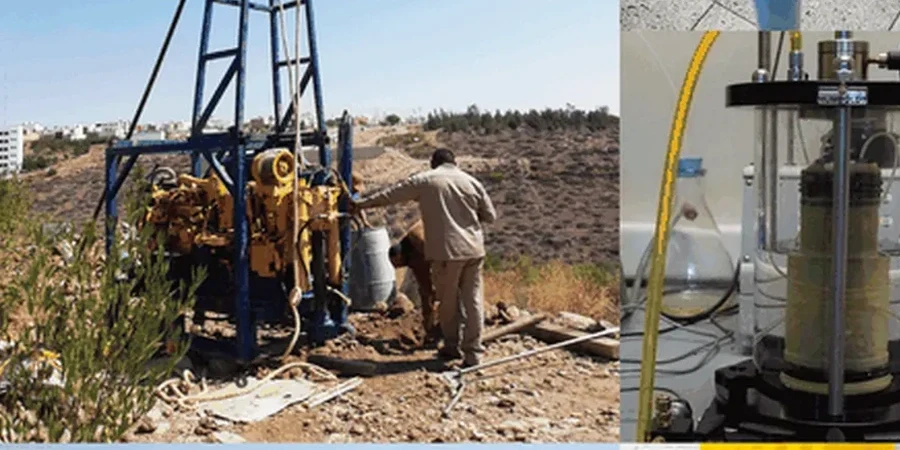
We often see projects in Windsor that skip the detailed soil mechanics study and go straight to a basic footing design, treating the local soil like a generic textbook material. That approach backfires fast when you hit the deep lacustrine clay deposits that dominate the city, particularly south of the E.C. Row Expressway. Windsor sits on the former bed of glacial Lake Warren, meaning the stratigraphy can shift from stiff till to soft, compressible silty clay within a single building footprint. A proper study goes beyond simple borehole logging: we measure consolidation parameters, undrained shear strength profiles, and seasonal groundwater fluctuations that directly influence basement construction. Without this level of analysis, you risk differential settlement that shows up as cracked partition walls and misaligned door frames within two years. Our lab in the region processes these samples under triaxial testing protocols to capture the stress-strain behavior Windsor clays exhibit under load, and we cross-reference those results with Atterberg limits to classify the soil's plasticity range and shrink-swell potential—a critical factor in the local clay belt.

Windsor's glacial lakebed clays exhibit preconsolidation pressures that vary by location; assuming uniform behavior across a site is the fastest path to a settlement problem.
Geotechnical Engineering in Windsor Ontario
Technical reference image — Windsor Ontario

Our approach and scope

A recent project comes to mind: a six-story residential building on Dougall Avenue where the initial site investigation showed medium-stiff clay to about 8 meters, but the mechanical response changed abruptly below that depth. The contractor had planned a conventional spread footing system, but our soil mechanics study revealed a soft varved clay layer with organic traces at the 9-meter mark, likely an infilled channel from the Detroit River's ancestral drainage path. Running consolidation tests on undisturbed Shelby tube samples gave us a compression index that predicted over 40 millimeters of settlement under the design load, well beyond the 25-millimeter threshold in the NBCC serviceability limits. We modeled the load distribution using layered elastic half-space assumptions and determined that a mat foundation combined with limited sub-excavation and engineered fill replacement would bring long-term settlement within acceptable tolerances. The Windsor building department reviewed our geotechnical report and issued the permit without revision requests—something that happens when the numbers are backed by rigorous lab data. These are the moments where a soil mechanics study stops being a regulatory checkbox and becomes the document that prevents a structural headache.

Local considerations

The drilling equipment we mobilize in Windsor has to handle two distinct challenges: the dense glacial till that sits beneath the clay in many parts of the city, and the high water table that sits barely 1.5 meters below grade in neighborhoods like Riverside and South Walkerville. Our truck-mounted CME-75 drill rig uses hollow-stem augers with an automatic SPT hammer to push through the stiff upper crust without disturbing the sample integrity. The biggest risk we see in the field is borehole collapse in the saturated clay zone; we counteract that by maintaining drilling fluid circulation with a bentonite slurry mix calibrated to the local water chemistry. Another risk specific to Windsor is the presence of methane gas pockets in the deep organic silts near the riverfront. Our crew carries gas detection monitors during drilling and follows Ontario Regulation 213/91 confined space protocols when advancing beyond 15 meters. A soil mechanics study here without gas monitoring in deep borings is a safety gap that no consultant should accept.

Need a geotechnical assessment?

Reply within 24h.

Email: info@geotechnicalengineering.vip

Typical values

ParameterTypical value
Undrained shear strength (Su)20 to 150 kPa depending on depth and OCR
Compression index (Cc)0.15 to 0.45 for Windsor clays
Overconsolidation ratio (OCR)1.2 to 4.0 in upper weathered crust
Liquidity index (LI)0.3 to 1.1 near groundwater table
Modulus of elasticity (Es)5 to 30 MPa from triaxial secant modulus
Saturated unit weight18.5 to 21.0 kN/m³
Permeability (k)1×10⁻⁷ to 1×10⁻⁹ m/s in lacustrine clay

Associated technical services

01

Consolidation and Settlement Analysis

Using incremental oedometer loading on undisturbed specimens, we determine the preconsolidation pressure, compression index, and coefficient of consolidation for Windsor clay layers. The output feeds settlement-versus-time curves that let structural engineers decide between surcharging, deep foundations, or ground improvement before the first footing is poured.

02

Shear Strength Profiling and Bearing Capacity

We combine field SPT N-values with laboratory unconsolidated-undrained (UU) and consolidated-undrained (CU) triaxial tests to map the shear strength envelope across the site. This data directly informs the bearing capacity calculations under NBCC limit states design, factoring in the seasonal water table fluctuations common in the Detroit River corridor.

Relevant standards

NBCC 2020 (National Building Code of Canada), CSA A23.3:19 (Design of Concrete Structures), ASTM D1586 (Standard Penetration Test), ASTM D4767 (Triaxial Compression Test), Ontario Regulation 213/91 (Construction Projects)

Frequently asked questions

How much does a soil mechanics study cost for a residential project in Windsor?

For most single-family or small multi-unit residential projects in Windsor, a complete soil mechanics study including drilling, sampling, lab testing, and a stamped geotechnical report typically ranges from CA$4,060 to CA$7,020. The final number depends on the number of boreholes required, the depth to competent bearing strata, and whether specialized tests like consolidation or triaxial are needed. Sites with known fill or near the riverfront tend toward the upper end of that range.

How many boreholes are needed for a soil mechanics study in Windsor?

The NBCC and standard geotechnical practice in Ontario recommend a minimum of three boreholes for a building footprint under 500 square meters, spaced to capture stratigraphic variability. In Windsor, where buried river channels and variable clay thickness are common, we often recommend four to five boreholes for irregularly shaped lots or projects with basement levels. The depth typically extends to at least twice the foundation width below the proposed footing elevation.

What soil conditions are typical in Windsor that affect foundation design?

Windsor's subsurface is dominated by glacial Lake Warren deposits: a stiff to very stiff silty clay crust extending 3 to 5 meters, underlain by softer varved clay and silt with occasional sand lenses. The water table is high, often within 1.5 meters of the surface, and the clays exhibit moderate to high plasticity with some shrink-swell potential. These conditions demand careful settlement analysis and often lead to designs incorporating deepened footings or mat foundations.

How long does it take to complete a soil mechanics study in Windsor?

From the day we mobilize the drill rig to the day you receive the final stamped report, a typical residential or light commercial study in Windsor takes between three and four weeks. The field drilling and sampling is completed in one to two days. The laboratory phase—Atterberg limits, moisture content, triaxial or consolidation testing—runs ten to fourteen days depending on the test suite. The remaining time covers engineering analysis, report drafting, and peer review.
Location and service area

We serve projects in Windsor Ontario and surrounding areas.

View larger map