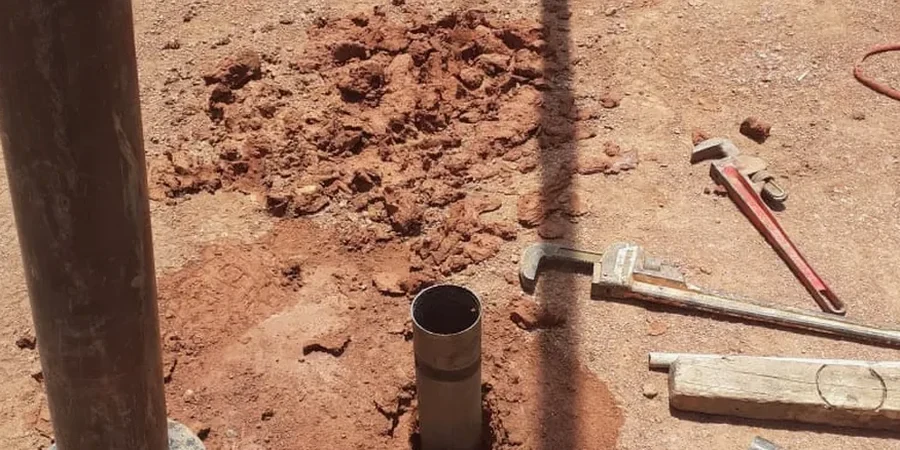
Windsor sits on a thick blanket of glacial lake plain deposits. The high water table across much of Essex County makes accurate hydraulic conductivity measurement a non-negotiable step before excavation or foundation design. The water is never far from the surface here. A test pit can reveal fractures in the underlying limestone, but only an in-situ borehole test quantifies the flow. We run Lefranc tests in granular soils above the bedrock and Lugeon packer tests in the fractured Detroit River Group limestone. Both methods give you the reliable K-value that a grain-size curve alone cannot supply. No assumptions. Just direct measurement under site-specific hydraulic gradients.
The Lugeon value tells you more about fracture connectivity than any lab test ever could. One single test can prevent a failed dewatering design.
Area-specific notes
Windsor's industrial history left a legacy of buried infrastructure and variable fill across the west end and Sandwich Town. Early urban expansion in the 1920s routed creeks into combined sewers, altering the natural groundwater regime. You cannot rely on regional maps. A localized permeability test is essential. Without it, you risk underestimating inflow to deep excavations. The result is often a flooded cut, destabilized slopes, or a dewatering system that runs at three times the required capacity. In fractured limestone, high Lugeon values near the river can indicate open conduits to the surface water. That changes the environmental risk profile immediately. We have seen projects where ignoring this data led to regulatory stop-work orders that cost months of delay.
Quick answers
What is the difference between a Lefranc and a Lugeon test?
A Lefranc test measures permeability in soil or very soft rock using an open borehole section. A Lugeon test is specific to fractured rock. It uses an inflatable packer to seal off a section of the borehole and measures water intake under pressure steps. The Lugeon value quantifies fracture transmissivity.
How long does a field permeability test take in Windsor?
A single Lefranc test typically takes 30 to 60 minutes depending on soil type and water level recovery rate. A Lugeon test in rock takes longer, usually 1 to 2 hours per test interval, because of the multiple pressure steps required by the standard procedure.
What is the typical cost range for in-situ permeability testing in Windsor Ontario?
The cost typically ranges from CA$820 to CA$1.630 per test interval, depending on depth, access conditions, and whether it is a Lefranc or Lugeon setup. Mobilization is priced separately based on the drill rig location within Essex County.
Can you perform Lugeon tests in the Detroit River Group limestone?
Yes. The Detroit River Group limestone underlies much of Windsor and presents variable fracture density. We use pneumatic packers rated for the expected injection pressures and select test intervals based on core logging and fracture mapping to target the most conductive zones.
Do I need a field permeability test or is a grain-size analysis enough?
A grain-size analysis gives an empirical estimate of permeability. It does not account for in-situ features like fissures, macropores, or bedding planes. For dewatering design, environmental assessments, or excavation planning near the Detroit River, a direct field measurement is required by most regulatory reviewers.