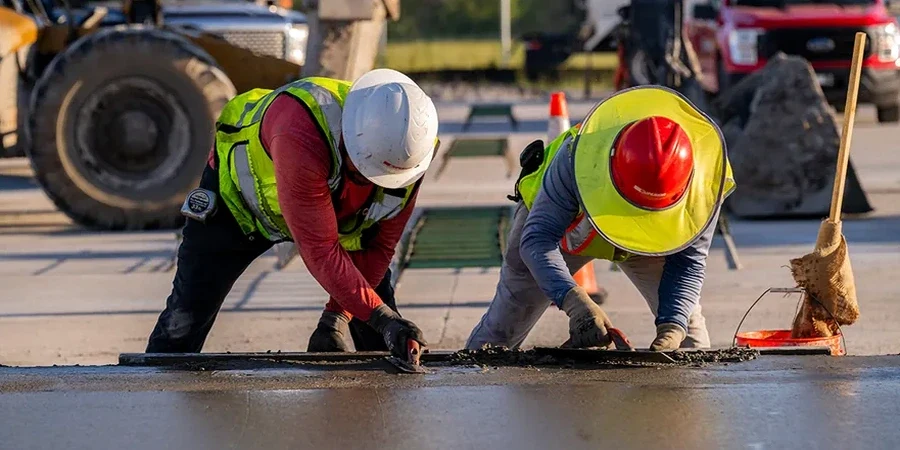
A common mistake in Windsor is treating a concrete pavement slab like a structural floor. The city sits on glaciolacustrine clay deposits that heave in winter and soften in spring—subgrade support can drop 40% between February and April. Without a proper rigid pavement design, you get corner breaks, pumping at joints, and longitudinal cracking within three to five years. We model slab thickness, dowel placement, and subbase drainage for the specific conditions along the Detroit River corridor. The approach integrates CBR road testing to quantify seasonal bearing capacity loss, and when the subgrade is marginal, we evaluate stone columns as a ground improvement alternative before placing the concrete. Every design references NBCC climatic data and CSA A23.3 for structural concrete, not generic Midwestern assumptions.
In Windsor, the difference between a 20-year pavement and a 5-year failure often comes down to 50 mm of additional subbase and correctly sized dowel bars.
Quick answers
How much does rigid pavement design cost for a typical Windsor industrial lot?
Design fees for a rigid pavement project in Windsor generally range from CA$2,420 to CA$8,660, depending on the paved area, traffic loading complexity, and whether field testing (plate load, CBR) is included in the scope.
Does rigid pavement work in Windsor's freeze-thaw climate?
Yes, when designed correctly. Air-entrained concrete, adequate subbase drainage, and properly sealed joints allow rigid pavements to perform for 20-30 years in Southern Ontario. The key is preventing water from saturating the subgrade before freeze-up.
What subgrade preparation is required under a rigid pavement?
We typically require removal of organic topsoil, compaction of the exposed subgrade to 98% standard Proctor density, and placement of a granular subbase. On Windsor clay, geotextile separation fabric between subgrade and subbase prevents fines migration and maintains drainage capacity.
How long after pouring can the pavement be opened to traffic?
Light vehicle traffic can use the pavement after 7 days of curing under normal temperatures. Heavy truck or forklift loading should wait until concrete reaches its design strength, typically 14 to 28 days, verified by field-cured cylinder breaks.